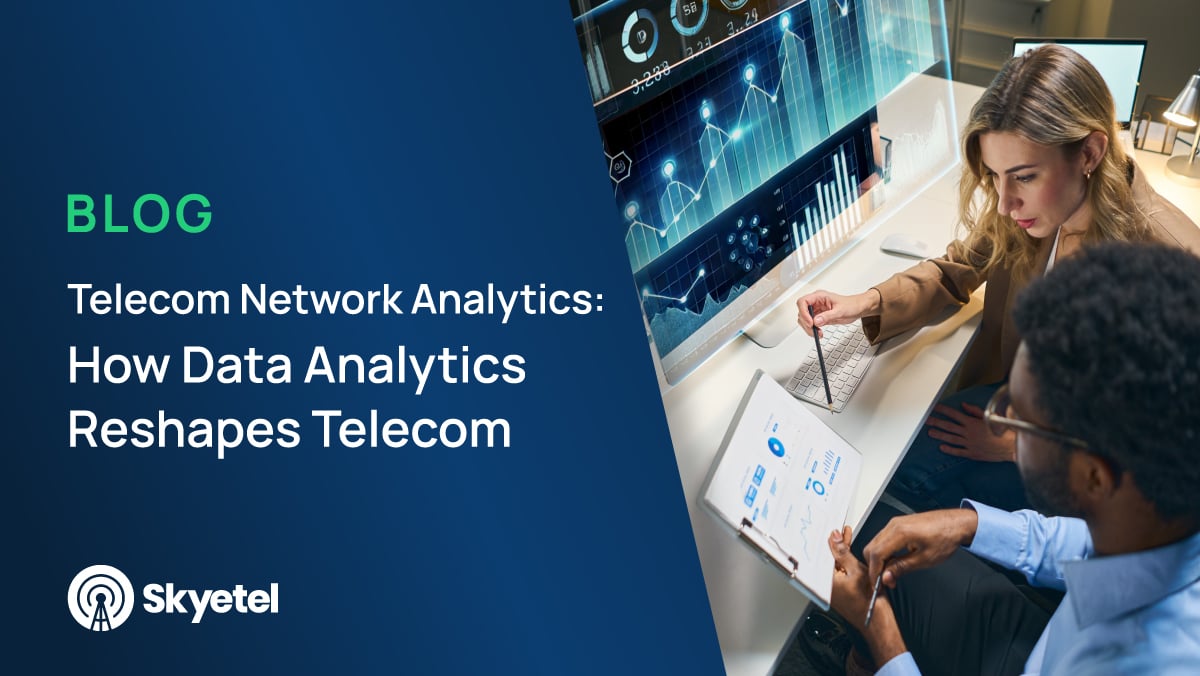
Modern telecom networks generate staggering volumes of data – every call, every message, every routing decision, every millisecond of latency leaves a record. That data has sat largely unused for years – even now, 74% of enterprise IT leaders manage more than 5PB of unstructured data.1
That's all changing.
The combination of cloud infrastructure, machine learning, and purpose-built analytics platforms has turned raw network data into one of the most powerful operational tools a carrier or enterprise can deploy. The organizations that understand how to use it are running faster, leaner, and more reliably than those that don't.
Read on to learn what telecom network analytics actually means, why it matters, and how the use of data analytics in telecommunications is reshaping everything from network performance to fraud prevention to customer experience.
What Is Telecom Network Analytics?
Telecom network analytics is the practice of collecting, processing, and interpreting data generated by telecommunications infrastructure to drive operational decisions. That data comes from virtually every layer of the network, including:
- Call detail records (CDRs)
- Signaling data
- Network device logs
- Quality metrics
- Traffic patterns
- Customer interaction data
Effective analytics transforms these raw records into insights that network engineers can act on in real time, that operations teams can use to allocate capacity, and that business leaders can rely on to make strategic decisions with confidence.
At Skyetel, we build real-time analytics and monitoring directly into our platform. Our network reliability infrastructure gives you visibility into how your voice and messaging services are performing – not as an afterthought, but as a core operational tool.
The Role of Telecommunications Analytics in Modern Networks
Telecommunications analytics serves a fundamentally different purpose today than it did a decade ago. It was once a retrospective reporting function, with management teams reviewing last month's call volumes or quarterly churn rates. Now it’s a predictive capability that shapes how enterprises are designing, managing, and securing their networks.
Several forces are driving this shift:
Network Complexity
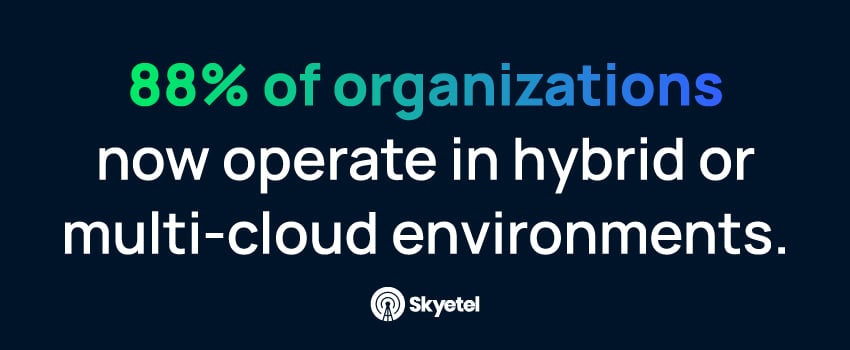
A 2026 survey found that 88% of organizations now operate in hybrid or multi-cloud environments,2 with telecom infrastructure spanning public cloud platforms, on-premise equipment, SIP trunks, and more. Managing performance across that landscape without real-time data visibility is operationally untenable.
Customer Expectations
Enterprises and end users expect near-perfect uptime and consistent call quality. Without real-time visibility into network performance and the ability to detect and resolve issues proactively, telecom providers simply can’t meet these escalating demands.
Security Pressure
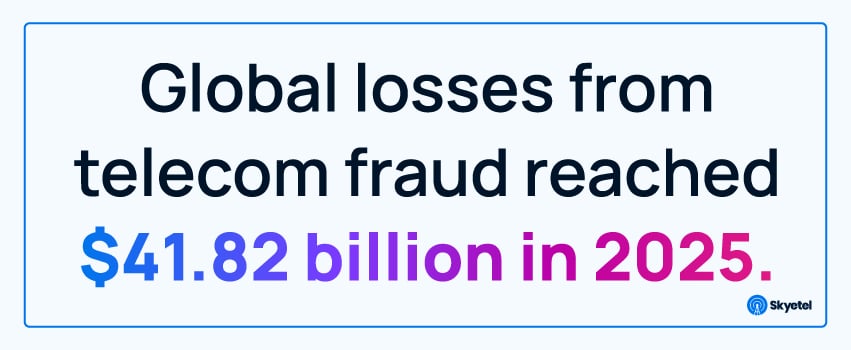
Global losses from telecommunications fraud reached $41.82 billion in 2025.3 Detecting and blocking fraudulent calls, along with threats like toll bypass, robocalls, and spoofing attacks, requires behavioral analytics that can identify anomalies in real time.
Competitive Differentiation
Carriers and enterprises that use analytics to optimize routing, reduce costs, and improve quality win customers. Those that don't are competing on price alone – a losing strategy long term.
Data Analytics in the Telecom Industry: Core Applications
Telecom network data analytics encompasses a wide range of applications. The most impactful fall into four core categories:
Network Performance Monitoring
Network performance monitoring tools are one of the clearest ROI drivers in telecom analytics. They provide real-time analytics by monitoring call quality metrics like jitter, latency, and Mean Opinion Score (MOS) across every active call path.
If network performance degrades, the system can automatically reroute calls or alert engineers before end users experience the impact.
Fraud Detection and Security
Analytics-driven fraud detection identifies suspicious patterns – unusual call volumes, geographic anomalies, high-cost destination spikes – in real time and triggers automated responses before too much damage occurs.
Skyetel’s security and fraud prevention platform integrates behavioral analytics with carrier-grade protections, including STIR/SHAKEN compliance, giving enterprises a security posture that goes well beyond what most providers offer.
Capacity Planning and Traffic Management
Historical traffic data and predictive modeling allow network operators to anticipate demand spikes, such as seasonal call volume increases or product launch surges, and pre-position capacity accordingly.
Without this capability, networks are either chronically over-provisioned (expensive) or vulnerable to congestion at peak moments (operationally risky).
Customer Experience Analytics
Call detail records, IVR interaction data, hold times, transfer rates, and resolution outcomes collectively paint a very detailed picture of the customer experience.
Organizations that analyze this data systematically can identify friction points and improve service levels in ways that purely anecdotal feedback never reveals.
Telecom Network Data Analytics: What the Data Actually Looks Like
Telecom network data analytics draws from a rich and varied set of data sources, each providing a different window into network behavior:
- Call Detail Records (CDRs): CDRs are the structured records of every call – originating and terminating numbers, duration, timestamps, routing path, and disposition.
- Signaling Data: This typically includes SIP message logs, ISUP records, and protocol-level events used to diagnose quality issues and routing failures.
- Quality of Service (QoS) Metrics: These measure jitter, latency, packet loss, and MOS scores for active calls, captured at the media layer.
- Network Device Telemetry: Provides an infrastructure-level view of your network’s health – including performance data from routers, switches, session border controllers, and media gateways.
- Messaging Data: This includes delivery rates, throughput metrics, error codes, and carrier response data for SMS and MMS traffic across all channels.
Managing this volume of data requires infrastructure that generates clean, accessible records by design. At Skyetel, our origination and termination services produce detailed call records and real-time quality data that give enterprises and resellers the visibility they need to operate with confidence.
Use of Data Analytics in Telecommunications: 3 Practical Examples
Here are three telecom network analytics use cases that illustrate the real-world impact on business operations:
1. Predictive Maintenance for Voice Infrastructure
A regional healthcare network might monitor call quality metrics across its SIP trunk connections in real time. When analytics detect packet loss on a specific carrier path, the system automatically shifts traffic to an alternate route before alerting the engineering team, who can then resolve the issue before any patient-facing calls are affected.
2. Fraud Pattern Detection at Scale
A wholesale VoIP provider can use behavioral analytics to establish baseline traffic patterns for each customer account. When a compromised PBX begins generating international call traffic at 3 AM at ten times the normal volume, the anomaly detection system flags and blocks the traffic within seconds – limiting exposure to a fraction of what it would have been with manual monitoring alone.
3. Capacity Optimization for a Contact Center
An enterprise contact center may analyze its CDR data to identify predictable call volume patterns by seasonal period. They can then use that model to adjust their SIP trunk capacity dynamically, scaling up before known peak periods and releasing unused capacity during the predicted low-traffic windows. The result is consistent call quality during peaks and cost reduction during off-peak hours.
More Telecom Network Analytics Use Cases
The use of data analytics in telecommunications varies widely, reflecting just how deeply data intelligence has penetrated every function of modern telecom operations.
Key use cases include:
- Real-time call quality monitoring and automated rerouting
- Predictive capacity planning based on historical traffic models
- Fraud detection and toll bypass prevention
- SLA compliance monitoring and reporting for enterprise customers
- Churn prediction and customer experience optimization
- Regulatory compliance reporting and call record management
- Network cost optimization through traffic pattern analysis
- Security threat detection and anomaly-based alerting
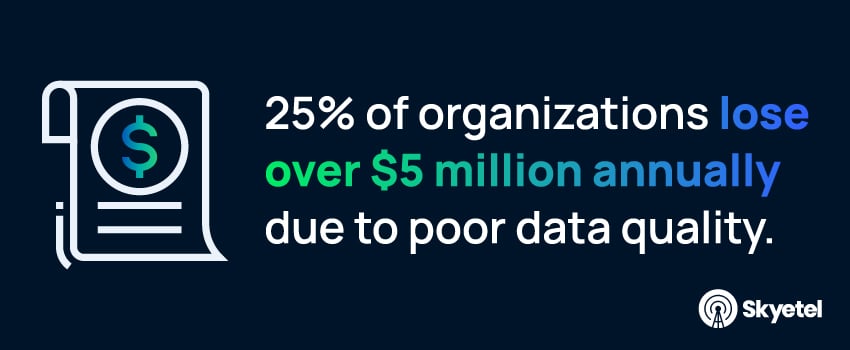
Each of these uses depends access to clean, complete, real-time data from the underlying network – and with 25% of organizations losing over $5 million annually due to poor data quality,4 building your analytics on a reliable foundation is essential.
That's why Skyetel built our network and reliability platform to give customers the data visibility and control they need to run analytically-driven operations, plus carrier-grade uptime to back it up.
Telecommunications Analytics Are Only as Good as Your Network
Telecommunications data analytics is now table-stakes for carriers, enterprises, and service providers operating at scale. The organizations winning on reliability, security, and customer experience are the ones that have made data visibility an operational discipline – not a quarterly reporting exercise.
But the quality of your analytics is only as good as the quality and completeness of the data feeding it. That starts with your network infrastructure – the carrier connections, SIP trunks, and voice platform that generate the call records, quality metrics, and traffic data your analytics stack depends on.
At Skyetel, we give enterprises and service providers the carrier-grade infrastructure and real-time visibility to operate with confidence. Get started with Skyetel today and see what it means to have a carrier that takes data seriously.
Sources:
- https://www.komprise.com/resource/2026-unstructured-data-management
- https://www.fortinet.com/blog/cloud-security/2026-cloud-security-report-data-reveals-complexity-gap
- https://tnsi.com/resource/com/the-telecom-fraud-landscape-in-2026-how-the-industry-is-fighting-back-blog
- https://www.ibm.com/think/insights/cost-of-poor-data-quality