The organizations that keep running when disaster strikes aren't just lucky – they're prepared. Having a solid business continuity strategy can make the difference between a fast recovery and an operational collapse, yet many companies are still woefully unprepared when it comes to continuity planning.
A recent survey found that only 26% of business leaders had an actual continuity plan in place, despite 94% believing that they’re ready to handle disasters.1 But as cyberattacks, supply chain disruptions, network failures, and natural disasters increase, this gap between confidence and preparation has become a major vulnerability across several industries.
In this guide, we’ll break down the most effective business continuity strategies, share real-world examples of each, and walk through best practices you can put to work immediately.
What Is a Business Continuity Strategy?
A business continuity strategy is a documented, actionable approach to maintaining essential operations before, during, and after a disruptive event. While disaster recovery focuses on restoring IT systems after a failure occurs, business continuity aims to secure your people, processes, communications, and infrastructure as a whole.
The goal isn't just survival. It's resilience: the ability to absorb disruptions and keep serving customers, maintaining revenue, and protecting your reputation without missing a beat.
For modern organizations, this resilience demands cloud-based communications. Voice, messaging, and fax services that can scale, reroute, and failover automatically – like those offered by Skyetel – are not just supporting infrastructure. They're core continuity tools.
7 Business Continuity Strategy Options To Know
The most effective business continuity strategies combine multiple approaches, including:
1. Geographic Redundancy
Distributing operations, data, and communications infrastructure across multiple physical locations is one of the oldest and most reliable business continuity strategy options. If one site goes down, others pick up the load automatically.
Continuity Example:
A hospital network routes inbound patient calls through a centralized VoIP platform with geo-redundant points of presence. If a power outage hits their primary facility, call traffic is automatically rerouted to operational sites so that patients and staff alike don’t experience downtime.
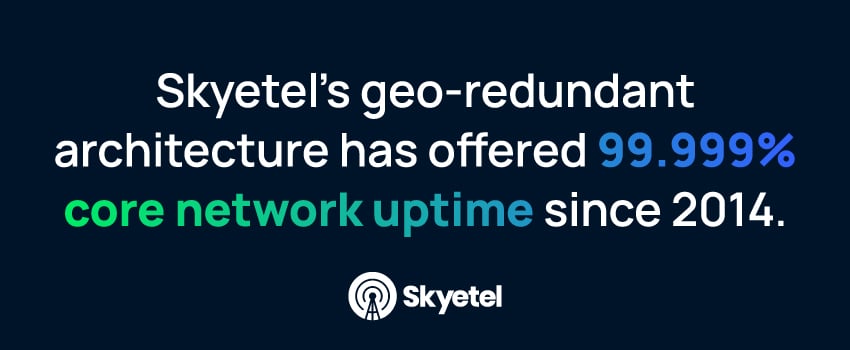
At Skyetel, we built our network reliability infrastructure on this exact principle – geo-redundant architecture with 99.999% core network uptime since 2014.
2. Data Backup and Recovery Planning
No continuity strategy works without reliable data. This means keeping regular, tested backups stored off-site or in the cloud, with defined recovery time objectives (RTO) and recovery point objectives (RPO) targets for each system or dataset.
Continuity Example:
A financial services firm stores encrypted call recordings in redundant cloud environments. Records remain accessible in the event of a primary system failure, ensuring regulatory compliance and operational continuity without interruption.
3. Remote Work Enablement
Being able to shift your workforce to remote operations isn't just a pandemic-era lesson – it's a permanent continuity requirement. Organizations that had already invested in cloud-based tools, VPN access, and flexible communications platforms were able to pivot in hours when offices became inaccessible. Those who hadn't were scrambling for weeks.
Building remote-readiness into your continuity plan means:
- Cloud-hosted PBX and UCaaS tools that work from any location
- Mobile-accessible voice and SMS/MMS messaging services
- Defined policies for who does what when physical offices close
Continuity Example:
A hospitality management company leverages a cloud communications platform that enables its front-office staff to take calls remotely. During a facility closure, this helps to prevent revenue loss because it keeps reservation lines live and guest services uninterrupted.
4. Communication Failover and Redundant Voice Infrastructure
Communication is often the first thing that breaks during a crisis – and the last thing organizations think to protect in advance. An effective business continuity recovery strategy must include failover for voice, messaging, and fax to make sure that teams, customers, and emergency services can stay connected no matter what.
That’s where SIP trunking comes in. SIP trunks aren’t tied to physical locations like legacy PRI circuits, so they can redirect call traffic dynamically and survive localized outages. Skyetel’s origination and termination services are designed for exactly this use case – giving businesses direct control over call routing so they can respond to disruptions in real time.
Continuity Example:
A national legal firm relies on a SIP trunk provider with automatic failover to a secondary carrier route. When a storm knocks their primary data center offline, inbound calls continue routing through the secondary carrier – no busy signals, no dropped calls, and no panicked clients.
 5. Incident Response Playbooks
Documentation is only as valuable as it is actionable. One of the most practical business continuity plan best practices is building scenario-specific incident response playbooks – step-by-step guides for your team to execute under pressure, without having to make decisions from scratch in the middle of a crisis.
Effective playbooks should:
- Define trigger conditions (e.g., "If primary voice infrastructure is unreachable for more than 10 minutes...")
- Assign named owners for each response action
- Include contact information for vendors, internal teams, and escalation paths
- Be reviewed and updated at least twice per year
Continuity Example:
A healthcare organization maintains an incident playbook for communications that includes steps for routing patient calls to a backup SIP trunk, notifying staff via SMS, and enabling remote triage operations. When a network intrusion forces a partial system shutdown, the team executes the playbook in under 20 minutes.
6. Vendor and Supply Chain Diversification
Single-vendor dependency is a hidden continuity risk. Organizations that haven't diversified their supply chain face a cascading failure if their service provider experiences an outage or shuts down. This applies to technology vendors, logistics partners, and yes – telecom carriers.
A true carrier that owns its network and doesn't resell capacity from a larger provider (like Skyetel) offers a level of redundancy and control that wholesale-dependent providers simply can't match. When evaluating business continuity strategy options for your communications stack, knowing who actually owns your carrier infrastructure matters.
Continuity Example:
A customer contact center maintains a direct relationship with a carrier-owned SIP trunk provider alongside their existing wholesale connection. When the wholesale provider experiences unplanned downtime, the contact center can automatically route calls through the carrier infrastructure so that customers aren’t disrupted.
7. Regular Testing and Continuous Improvement
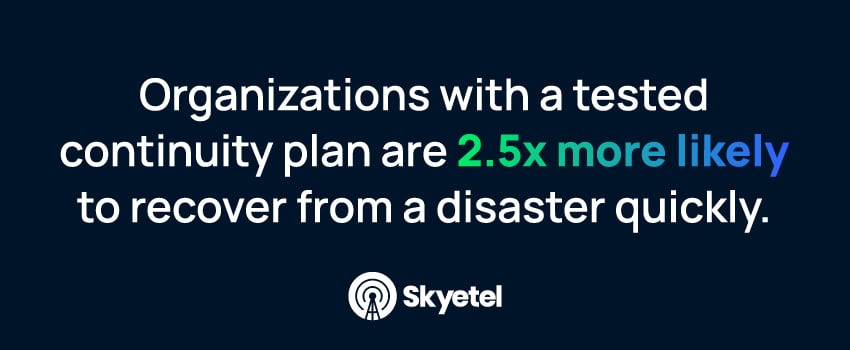
Organizations with a tested continuity plan are 2.5x more likely to recover from a disaster quickly.2 Tabletop exercises, full failover simulations, and regular audits are what separate resilient organizations from those that discover gaps in real time during an actual incident.
Testing isn't a one-time event. Threats evolve, systems change, and teams turn over. Your continuity strategy should include:
- Annual full-scale business continuity exercises
- Quarterly tabletop simulations with stakeholders
- Post-incident reviews after any real disruption – even minor ones
- Processes for incorporating lessons learned into documentation
Continuity Example:
A financial services firm performs quarterly tabletop exercises that include communication failover scenarios. During one drill, they discovered that their backup SIP trunk provider's routing was configured incorrectly and would have failed to activate during a real incident. The testing program had identified a critical gap that would have otherwise left them without voice services during an actual crisis.
Business Continuity Best Practices: What Separates Good Plans From Great Ones
Following business continuity best practices means going beyond the basics of backup and recovery to build genuine organizational resilience. Here's what distinguishes the plans that actually work:
Align Your Plan to Business Impact, Not Just IT Risk
Most continuity frameworks start with IT. That's a mistake. Start with business impact analysis (BIA) – identifying which functions are most critical to revenue, compliance, and customer service. Then build your technical and operational safeguards around those priorities.
Communications is consistently one of the highest-impact areas in any BIA. The ability to reach customers, coordinate staff, and connect with emergency services during an incident often determines whether a business recovers quickly or struggles for weeks.
Integrate Communications Into Business Continuity Procedures
Voice and messaging are foundational business continuity procedures components that often get treated as afterthoughts. They shouldn't be. Your continuity plan should explicitly address how:
- You’ll handle inbound calls if primary systems are unavailable
- Staff will communicate internally during a network event
- E911 services will remain accessible for distributed or remote workers
Without these communication elements, the gaps in your continuity plan will become obvious during an actual incident.
Prioritize Security Alongside Availability
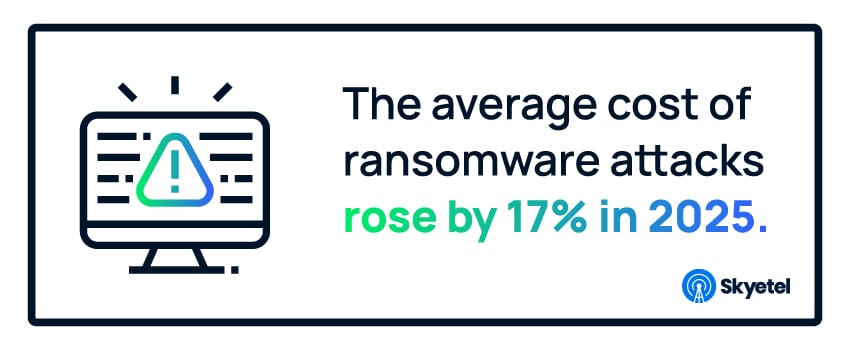
A ransomware attack is one of the most common triggers for continuity plan activation. And with the average cost of these attacks rising by 17% in 2025,3 ensuring your business continuity strategy addresses fraud prevention, toll fraud protection, and STIR/SHAKEN compliance as core elements should be a top priority.
Skyetel’s platform includes built-in fraud protection and STIR/SHAKEN compliance to ensure your voice infrastructure doesn't become a liability during a security incident.
Document, Don't Memorize
Critical knowledge shouldn't live only in the heads of your most experienced employees. If your continuity plan requires specific people to be present and available to execute, it's already fragile. Comprehensive documentation – accessible to anyone who might need to act – is non-negotiable.
What’s a Good Business Continuity Strategy Example?
Here's a business continuity example drawn from how an enterprise-scale professional services firm might structure its approach:
Scenario: Primary office becomes inaccessible due to a severe weather event lasting 3–5 days.
- Communications: SIP trunks are preconfigured to route all inbound calls to remote staff mobile devices. SMS notifications go out to clients automatically. E911 services remain active for employees working from home.
- Operations: Cloud-hosted applications are accessible from any location. VPN access is tested monthly. A designated "remote work coordinator" role activates the remote operations playbook.
- Data: All critical files are replicated in cloud storage with access controls intact. Data is current to within 15 minutes of the last backup cycle.
- Vendor Management: Primary and secondary voice carrier contracts are in place. The secondary carrier (with independent infrastructure) can activate within minutes.
- Testing: This exact scenario was rehearsed six months prior. Gaps identified then – specifically around E911 for remote workers – were resolved before the real event occurred.
The result: five days of disruption that a competitor in the same storm took three weeks to recover from.
Strengthen Your Business Continuity Strategy With Skyetel
The businesses that navigate disruption best treat resilience as infrastructure, not an afterthought. That means investing in reliable, redundant systems – and choosing partners whose uptime commitments aren't just marketing language.
Skyetel’s carrier-grade telecom network offers 99.999% uptime, geo-redundant infrastructure, carrier-grade security, and a team of U.S.-based engineers available around the clock, so you get peace of mind knowing you have the infrastructure in place to keep operations running when everything else is under stress.
Whether you're building a continuity plan from scratch or stress-testing what you already have, we're here to help. Get started with Skyetel today.
Sources: